
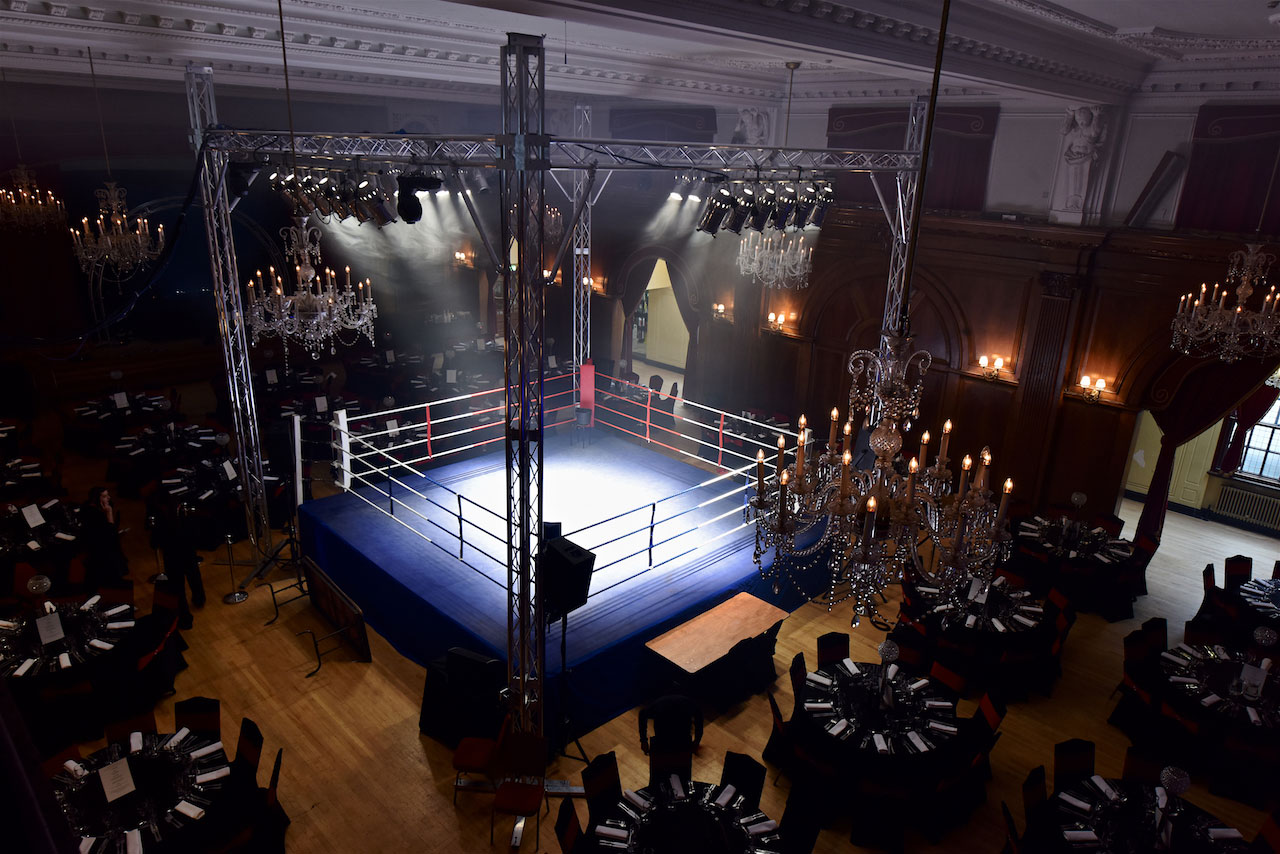
Most technical failures at events aren’t the result of broken equipment. They’re the result of decisions made, or not made, weeks before anyone walked into the room. A microphone that cuts out, a screen no one at the back can read, a sound mix that drowns out the speaker: these are almost always planning failures rather than equipment failures, and they’re AV mistakes that are almost always avoidable.
Having worked on events across every scale and setting, we see the same handful of mistakes recur. Here are the ten most common, and what to do differently.
1. Underestimating the Room
A sound or lighting setup that would be perfectly adequate in one space can fall completely flat in another. High ceilings swallow sound. Long, narrow rooms cause coverage problems. Glass walls create glare that ruins screen visibility. Every room behaves differently, and equipment needs to be chosen for the specific space, not a generic event size.
The fix: Get your AV supplier into the venue, or working from detailed venue specifications and photos, before quoting equipment. A supplier who quotes without understanding the room is guessing.
2. Treating Microphones as an Afterthought
Nothing derails an audience’s attention faster than intermittent or poor-quality audio. Handheld mics get put down and forgotten, lapel mics rub against clothing, and shared mics create awkward hand-offs between speakers.
The fix: Match the microphone type to how each speaker will actually move and present, and always have a backup on standby. A technician monitoring live sound catches problems before the audience does.
3. Skipping a Proper Technical Rehearsal
Running through slides the morning of an event is not the same as a full technical rehearsal. Cues get missed, video content does not play correctly, and speakers discover microphone issues for the first time in front of a live audience.
The fix: Build in genuine rehearsal time, even if it is brief – it is the single most effective way to catch problems while they are still easy to fix.
4. Screens That Are the Wrong Size for the Room
A screen that looks perfectly sized in a small meeting room can be unreadable from the back of a larger hall. Text, in particular, needs to be sized for the furthest viewer, not the nearest.
The fix: Screen size and positioning should be calculated against viewing distance and room layout, not chosen based on what is available or what looks good in a photo.
5. Ignoring Ambient Light
Screens and projection are highly sensitive to ambient light, a projector that looks sharp during a walkthrough can wash out completely once natural light floods the room later in the day.
The fix: Factor in the time of day your event runs and how light will change in the space. LED screens or higher-brightness projection may be needed for daytime events in bright rooms.
6. Overloading the Power Supply
Technical failures caused by power issues are entirely preventable, yet they remain common. Overloaded circuits, incorrectly rated extension leads, and unplanned power draw can cause equipment to fail mid-event.
The fix: Power should be planned and distributed properly as part of the technical design, rather than worked out on the day using whatever sockets are available in the room.
7. Assuming the Venue’s House Kit Will Be Enough
Many venues have basic in-house AV equipment, and for very simple events it may be sufficient. The mistake is assuming it will cover a more complex brief without actually checking its capability, age, or suitability for the audience size involved.
The fix: Ask specific questions about the house equipment before relying on it, or bring in your own technical partner to assess whether it genuinely meets your needs.
8. No One Dedicated to Running It Live
Even well-planned technical setups can fail if there is no one actively monitoring and operating them during the event. Someone needs to be watching sound levels, managing cues, and ready to react the moment something changes.
The fix: Have a dedicated technician on site for the full duration of the event, not just for setup and pack-down.
9. Leaving Lighting as a Last-Minute Decision
Lighting is frequently treated as decoration rather than function. Poor lighting makes speakers hard to see, affects the mood of a room entirely, and can ruin photography and video that clients rely on afterwards.
The fix: Plan lighting alongside sound and visuals from the start, not as an afterthought once everything else is confirmed.
10. Choosing a Supplier on Price Alone
The cheapest AV quote is rarely the cheapest option once problems occur during the event itself. A supplier who has under-quoted equipment, crew, or planning time has to cut corners somewhere, and it usually shows on the day.
The fix: Compare quotes on what is actually included, particularly around planning time, technical crew, and contingency equipment, rather than the headline price alone.
Avoiding These Mistakes Starts With the Right Partner
Every AV mistake on this list has one thing in common: it is preventable with proper planning and an experienced technical team involved early. At Pro Event Solutions, we build every event around avoiding exactly these issues, from the initial brief through to live delivery and pack-down.
If you would rather not find out about these problems the hard way, get in touch and we will help you plan it properly from the start.